Home/Dark Factory · Made-to-Measure

Dark Factory.

30-second body scan in the Mobile Tailor tab. Garment stitched to order in a Bangalore micro-factory, delivered home in 7 days. Same price as a regular Reliance Trends garment.

Proposed · awaiting decision Alpha · 1 Bangalore Trends store · pending sign-off Roadmap · Beta & Gamma · AJIO-permanent
Headline numbers · 30-Apr-2026
Body scan
30 sec
phone camera · 14 measurements · < 1 cm mean error
Order → doorstep
7 days
guaranteed date shown before payment
Capacity · 1 micro-factory
200 / day
Bangalore · single floor · 15,326 sq ft
Inventory holding
0 days
fabric pulled only when an order is paid
Operating intent

One scan, one fit, one promise. Made to order, never made to stock. Same selling price as a regular Trends garment for the standard fit; customisations priced live before payment, opt-in upside on every order.

Front-end captures the customer. Dark Factory makes the garment.

Fynd Horizon is the customer-facing experience layer — body scan, 3D try-on, checkout. Live today at RCP and Mumbai cluster. Dark Factory is the Reliance-owned manufacturing back-end that scales Horizon's MTO promise beyond the Tirupur partner factory. One paid-order event hands off the body model + garment spec from front-end to back-end.

Step 1 · Customer

AJIO app or Trends store.

Three AJIO-app surfaces or three in-store placements deep-link into the M-Tailor tab.

Step 2 · Fynd Horizon
Live

Front-end · capture & try.

Body scan · 3D try-on · catalogue browse · checkout. Live at RCP and Mumbai cluster.

Step 3 · Dark Factory
Proposal

Back-end · make.

Pattern · cut · stitch · finish · pack. Bangalore micro-factory at 200 pieces / day.

Step 4 · Doorstep

7 days.

Guaranteed delivery date shown before payment.

Why this split

Today, Horizon's measure-perfect path runs through the Tirupur partner factory at 24-48 hr. Dark Factory takes that same MTO commitment in-house — Reliance-owned, single-piece flow, scoped for AJIO catalogue depth (shirt, T-shirt, polo, pants → all categories at gamma). The front-end (Horizon) and the back-end (Dark Factory) are sized independently and connected through one paid-order event.

What's specified. What's pending. What ships when.

What's specified
Proposal
  • Mobile Tailor app surface · 8-step flow inside the AJIO app · 3D fit visualiser · 6 fit sliders · collar / pocket / button / monogram options
  • Bangalore micro-factory · single floor · 15,326 sq ft · 200 pieces / day at full run rate
  • Live Kitchen order screen · real photo at every factory stage · sourced, cut, stitched, finished, shipped
  • Two entry-point sets · 3 AJIO-app surfaces (banner, home-feed card, Trends PDP ribbon) and 3 in-store placements (entry standee QR, fabric-bay shelf-talkers, back-wall scan zone)
Pending decision
Awaiting sign-off
  • Alpha trial sign-off · 1 Bangalore Trends store · single named owner accountable for 7-day delivery and NPS > 70
  • 7-day delivery and zero-stock standard · adopted as the Trends standard for this category
Phased roadmap · post-decision
Roadmap
  • Alpha · 1 Bangalore Trends store · internal staff + invited customers · shirt + T-shirt · exit at 100 paying customers, NPS > 70, 95% delivery SLA
  • Beta · 5 Bangalore stores · public launch · shirt + T-shirt + polo + pants · manufacturing automation live · exit at 1,000 paying customers / month, repeat > 25%
  • Gamma · all-India · men + women + kids · 2 additional micro-factories near demand · Mobile Tailor permanent in the AJIO app · exit at 10,000+ paying customers / month
  • L3 autonomy targets · per the autonomy framework that anchors the 30-Apr-2026 letter to MM Sir

From a shop visit to an app scan. From shelf inventory to make-to-order.

Reliance Trends today sells ready-made garments to a body that is never average. Custom fit means a tailor's shop — slow, inconsistent, no preview before the garment is finished. Mobile Tailor brings the tailor inside the AJIO app and the lights-out factory inside Reliance's manufacturing footprint.

LensReady-made / tailor todayDark Factory · Mobile Tailor
Fit measurementIn-shop tape · inconsistent across visits30-second phone-camera scan · 14 measurements · < 1 cm mean error
Preview before paymentNone · garment seen only once finished3D fit visualiser · garment drawn on the customer's own body model
Inventory modelMake-to-stock · markdown risk on every garmentMake-to-order · zero unsold inventory · zero markdown
Store space costShelf rent for displayed SKUsZero shelf rent for this category · frees Trends floor for higher-velocity SKUs
Order → doorstep7-21 days at a tailor · multiple visits7 days · no shop visit · no measurement tape · no re-alteration
Customisation upsideNegotiated in-shop · margin opaquePriced live in the app before payment · opt-in upside on every order
The customer promise · four lines · met every time
  • · A guaranteed delivery date shown before payment
  • · A fit visible on a 3D model of the customer's own body before payment
  • · Same price as a regular Trends garment if only the fit changes; customisations priced live and shown before payment
  • · A live order timeline showing the garment being sourced, cut, stitched, finished, and shipped

Two entry points. One M-Tailor screen. Eight steps to a 7-day delivery.

From the AJIO app, three home surfaces (banner on app open, hero card on the home feed, contextual ribbon on every Trends product page) deep-link into the M-Tailor tab. In a Trends store, three placements (entry standee QR, fabric-bay shelf-talkers, back-wall scan zone) do the same. Both paths walk through the same eight steps.

Entry path A

AJIO app · 3 surfaces

  • · Banner on app open
  • · Hero card on the home feed
  • · Contextual ribbon on every Trends product page
Entry path B

Trends store · 3 placements

  • · Entry standee QR
  • · Fabric-bay shelf-talkers
  • · Back-wall scan zone
Hub · in the AJIO app

M-Tailor tab.

Both entry paths land on the same screen. The 8-step flow runs from here · 7 days end-to-end.

Saved on first visit: body model + fit preferences · second order < 2 minutes.
The 8 steps · in sequence · 7 days end-to-end
1
Scan

30-second body capture.

Phone camera · 14 measurements · mean error < 1 cm. Body model saved to the customer profile for re-use.

2
Pick

Choose a garment.

Browse the M-Tailor catalogue · shirt, T-shirt, polo, pants. Garment renders on the customer's own 3D model.

3
Fit

Six sliders.

Adjust collar, sleeve, chest, waist, length, and shoulder fit. Fit-confidence score updates live.

4
Customise

Collar / pocket / buttons / monogram.

Each add-on priced live and shown before payment. Opt in or skip · margin upside per accepted add-on.

5
Pay

Guaranteed 7-day delivery date.

Final price (base + add-ons) and the guaranteed delivery date shown before checkout. One-tap payment kicks off the make loop.

6
Make

Bangalore micro-factory.

Pattern auto-generated from the scan · single-ply cut · single-piece sewing · finished · packed. Real photo at each stage.

7
Ship

Home delivery.

Last-mile dispatch from the micro-factory. Order timeline updates at each handoff.

8
Repeat

Saved fit · second order < 2 min.

Body model and saved fit accelerate the second order. Target repeat rate > 25% within 90 days.

Six departments. One single-piece flow. Every machine sized for 200 pieces / day.

Each department is single-purpose, replaceable, and named to a specific brand. The line runs single-ply through every step — fabric is cut, sewn, finished, and packed for one order at a time, never batched.

Department 1 · Measurement & intake
Proposal

Phone scan in 30 seconds. 14 measurements at < 1 cm error.

Customer takes a 30-second body scan in the M-Tailor tab. Bodygram + IR fit engines translate four signals into a standardised digital baseline that the pattern engine acts on.
Signal 1
3D body scanning · spatial geometry from depth + camera
Signal 2
Algorithmic body typing · drop profiles + posture adjustments
Signal 3
Manual translation · standardises traditional tailor inputs
Signal 4
Fit preferences · digitises subjective customer ease + drape
SHOULDER CHEST WAIST HIP THIGH INSEAM
14 measurement points · mean error < 1 cm · 30-second capture. Body model saved to the customer profile for re-use; second order < 2 minutes.
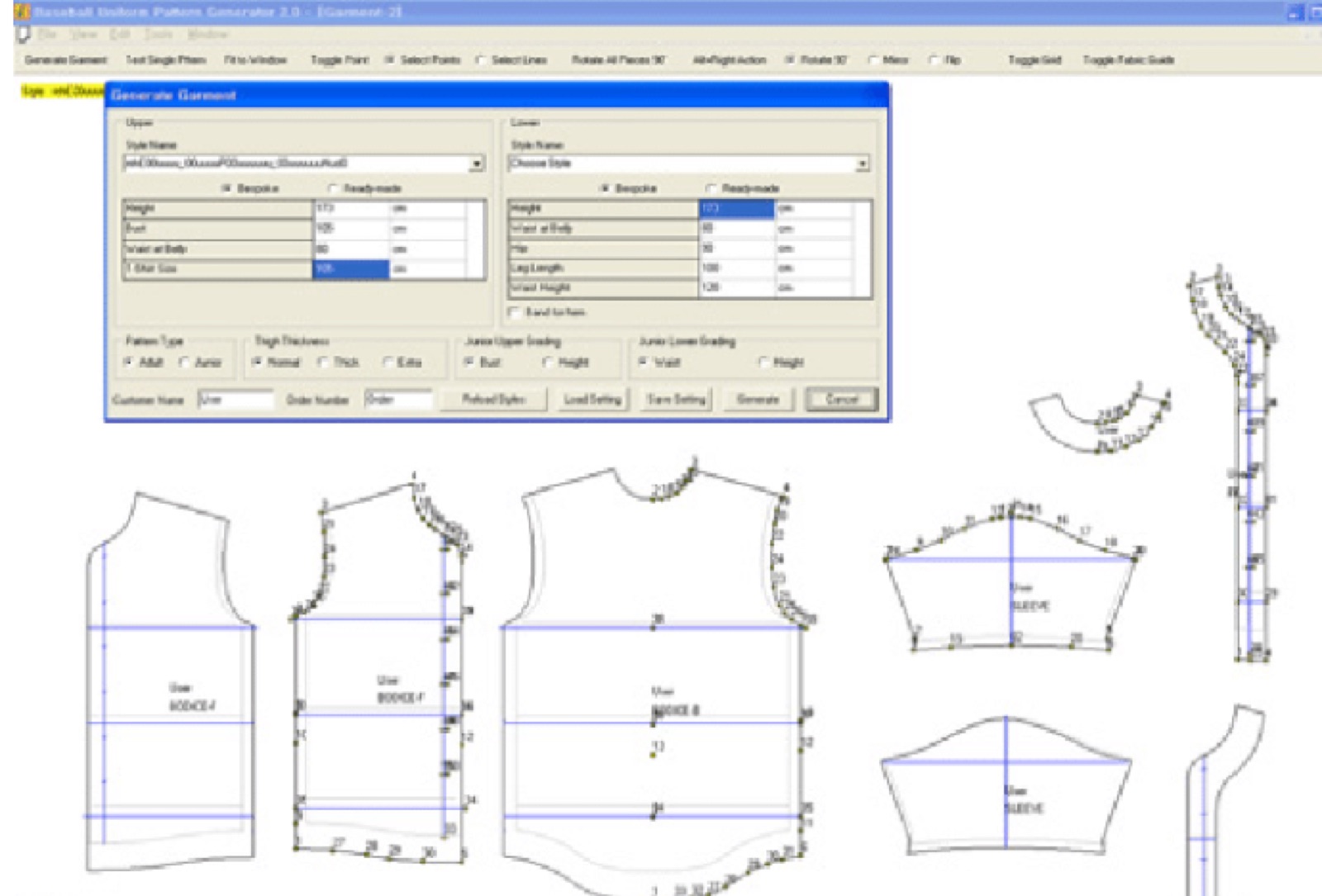
Gerber AccuMark MTM CAD interface · pattern blocks for shirt back, sleeves, and cuffs with size-rule overlays
Department 2 · Pattern engineering
Proposal

Per-order CAD.

Body model lands in the CAD engine; logic rules modify a master block to fit the customer's exact dimensions; the modified pattern flows to the cutter.
Software: Gerber AccuMark MTM · Lectra Modaris · Tukatech. Nesting and yield optimisation single-ply via Gerber Accunest.
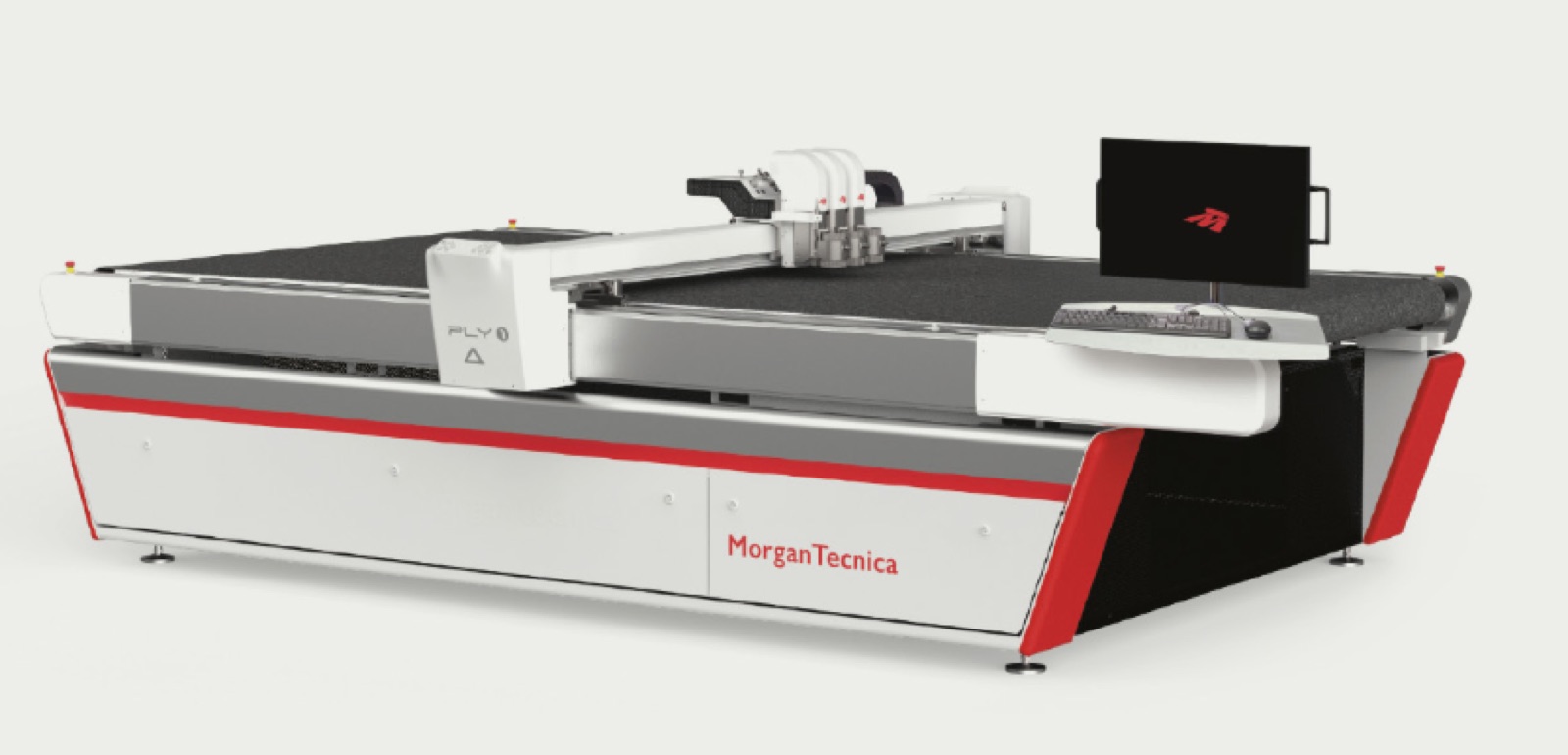
Morgan Italia single-ply cutter · automated cutting bed with overhead carriage
Department 3 · Cutting room
Proposal

Single-ply precision.

Single-ply cutter pulls one customer's pattern at a time. Visual nesting and projection align stripes and plaids across seams via a projected grid; QR labelling tags every part so the order never gets lost in the line.
Machinery: Morgan Italia Next 1 · Shima Seiki PCAM 181 · Hashima fusing · Epson F3030 direct-to-garment printer.
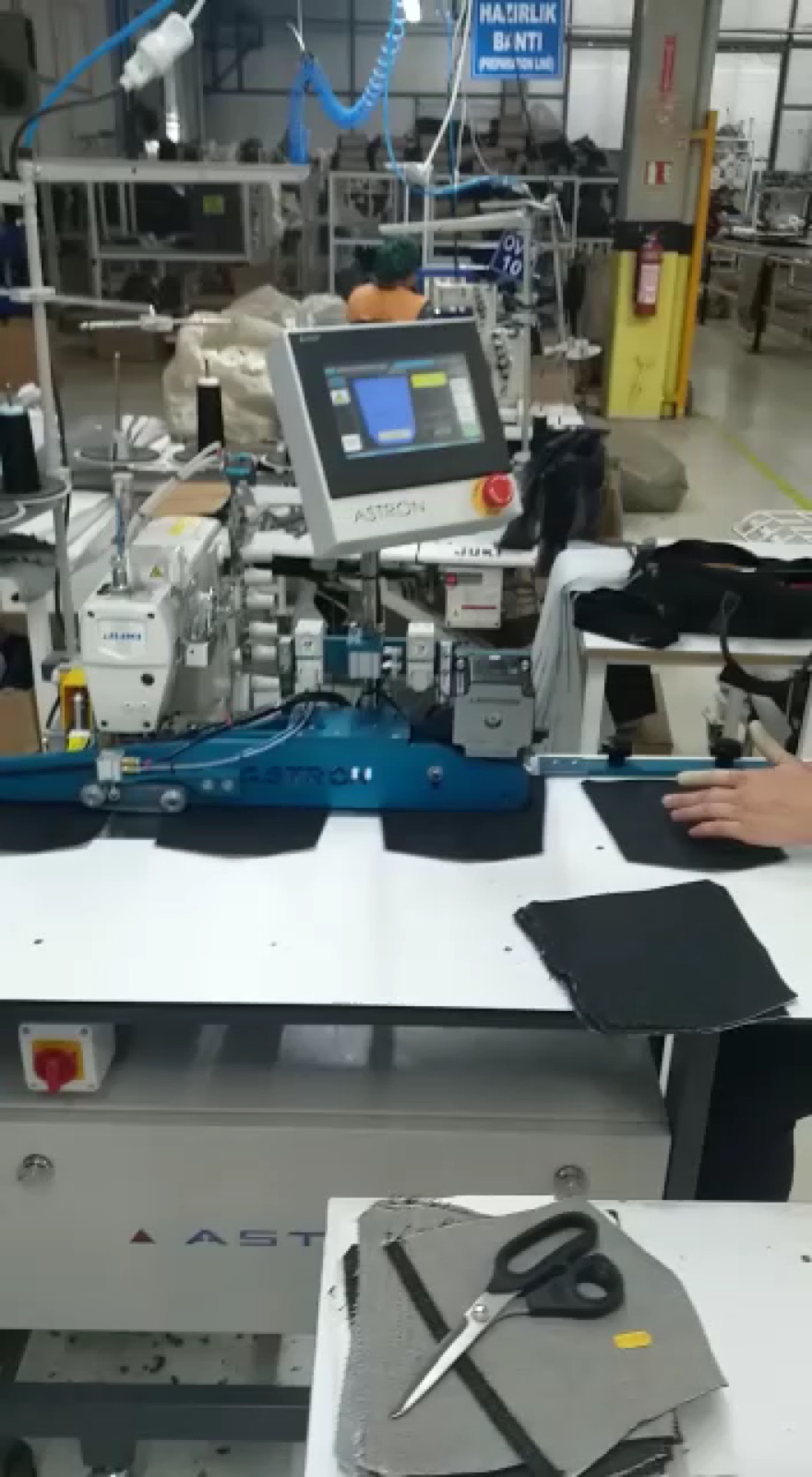
Juki sewing automat in operation on the factory floor · digital control screen + single-piece workstation
Department 4 · Sewing room
Proposal

Single-piece flow.

Juki automats handle shirts, polo, chinos, and pants. Semi-automats handle T-shirts and other knits. Each workstation processes one customer's garment at a time — no batching, no WIP piles.
Machinery: Juki shirt + chinos / pants automats · semi-automats for T-shirt + knit lines · single-piece flow workstations.
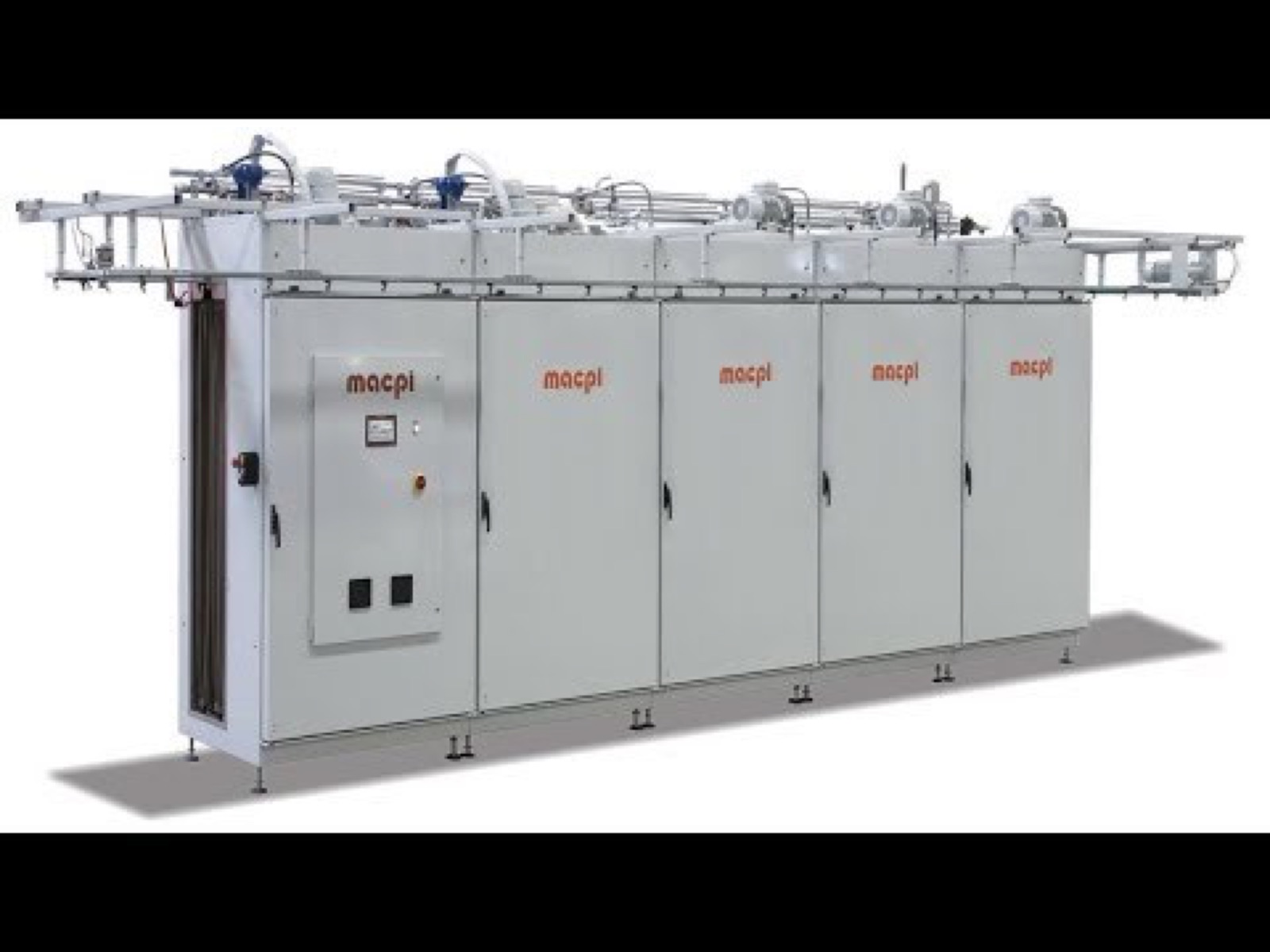
Macpi modular pressing chamber line · 5 chambers with overhead carriage and control panel
Department 5 · Pressing & finishing
Proposal

Modular chambers.

Modular steaming + ventilation chambers with a 20-program touch-screen controller. Each garment runs through the press cycle that matches its fabric and finish.
Machinery: Macpi pressing chambers (534, 565.17-8526, 321.715) · 20-program touch-screen controller.
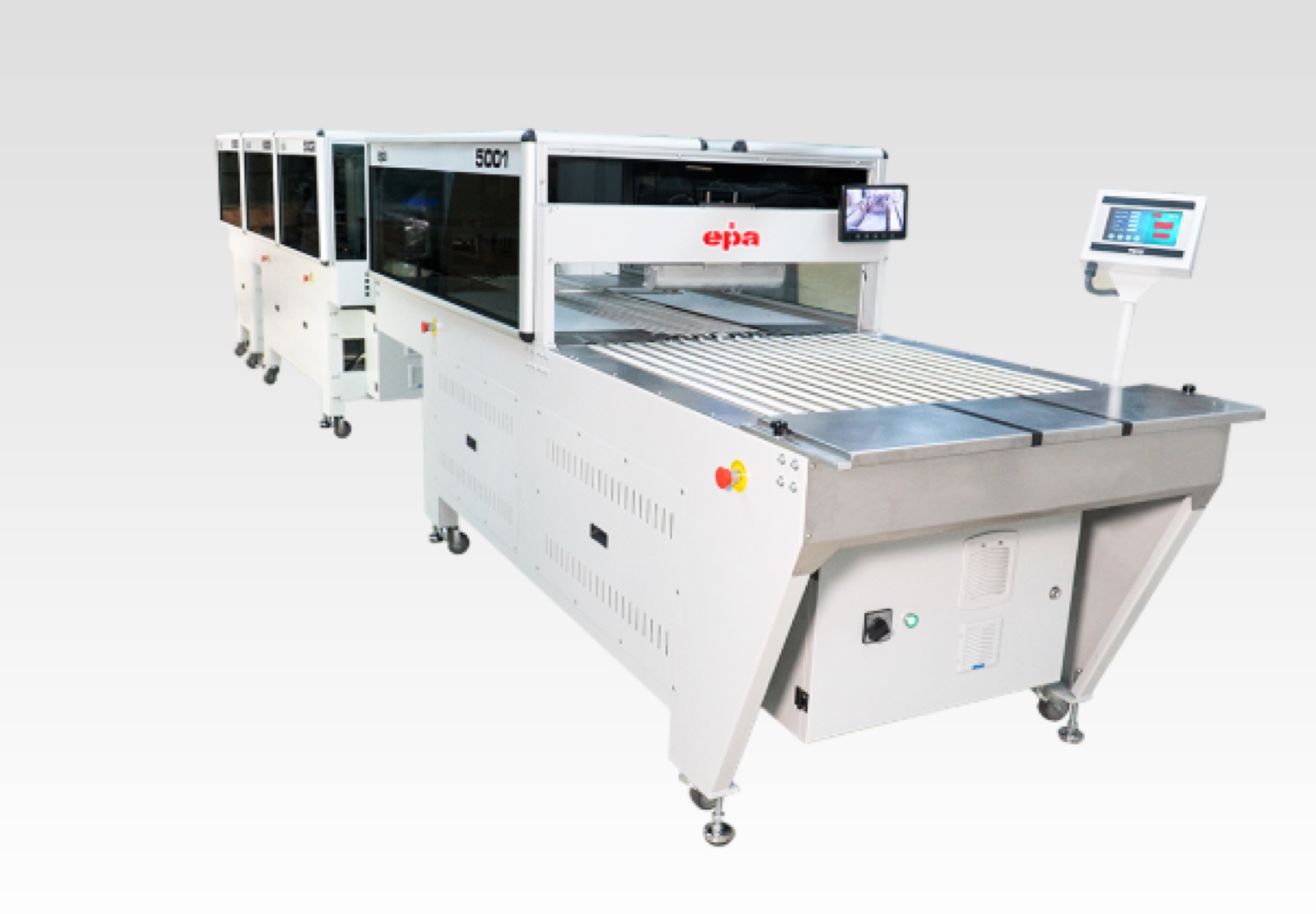
EPA-5001 automatic folding and packaging line · production folding machine on the factory floor
Department 6 · Folding & packing
Proposal

Automated folding line.

Folding line takes the finished garment, folds, packages, and dispatches to the last-mile courier. The order timeline updates at every handoff.

Machinery: EPA-5001 automatic folding + packaging machine · EPA ACE901 folding line.
Material movement · across all six departments

Eton overhead conveyor links cutting → sewing → finishing → folding without WIP piles. Every part is QR-tagged at the cutter and flows through the line as a single-piece job. The conveyor is what makes single-piece flow possible at 200 pieces / day; without it the line falls back to batched WIP.

One floor. Four zones. First-in-first-out from entrance to dispatch.

Proposal

Cutting runs through the centre line · sewing on the right · finishing, pressing and packing on the south wall · fabric and trims store flush against the entrance for first-in-first-out flow. The Eton overhead conveyor links every zone.

Zone A · entrance
Fabric + trims store
First-in-first-out · QR-tagged on receipt · pulled on paid order
Entry
Zone B · centre line
Cutting room
  • · Morgan Italia single-ply cutter
  • · Shima Seiki PCAM 181
  • · Pattern matching · stripes & plaids aligned
  • · Hashima fusing · Epson F3030 print
single-piece pattern flow · centre line of floor
Zone C · right block
Sewing block
  • · Juki shirt + chinos automats
  • · Semi-automats for T-shirt + knits
  • · Single-piece workstations
single-piece workstations · no WIP batching
Zone D · south wall
Finishing · pressing · packing · dispatch
Exit
Macpi modular pressing chambers · EPA ACE901 folding line · EPA-5001 packaging · last-mile dispatch.
Material movement
Eton overhead conveyor · links A → B → C → D. Single-piece flow throughout · zero floor WIP.
Capacity
200 pieces / day at full run-rate. Sized to ramp 60 (alpha) → 150 (beta) → 200 (gamma).
Footprint
15,326 sq ft · single floor · final dimensions to be locked with civil partner.

Trust built into the order screen, not into a marketing claim.

Like a transparent restaurant kitchen, the customer sees a real photo of her own garment at every factory stage. The order timeline replaces the "your order is being processed" abstraction with five named, photographed states.

1

Sourced

Fabric pulled · trims tagged · QR-attached to the order.

Live photo · stage 1
2

Cut

Single-ply cutter · per-order pattern · stripes and plaids aligned.

Live photo · stage 2
3

Stitched

Single-piece flow · automats for shirt / polo / pants · semi-automats for knits.

Live photo · stage 3
4

Finished

Pressing chamber · folding line · monogram printed where ordered.

Live photo · stage 4
5

Shipped

Packed · dispatched · last-mile handoff · delivery date confirmed.

Live photo · stage 5

Photo zone is the placeholder where the customer's own factory-stage photo lands during alpha. Until then, the timeline communicates the five named states.

Demand loop in the app. Supply loop in the factory. Customer is the only person who sees both.

The two loops are separable, sized independently, and connected through a single paid-order event that triggers fabric pull. This is what removes inventory risk while keeping the customer experience tight.

Loop 1 · Demand · inside the app
Proposal

Scan → Pick → Fit → Pay.

  • · Body model captured once · re-used on every visit
  • · Garment rendered on the customer's own model · not on a stock model
  • · Customisations priced live before payment · opt-in upside captured per order
  • · Guaranteed delivery date shown before checkout
Loop 2 · Supply · inside the micro-factory
Proposal

Source → Cut → Stitch → Finish → Ship.

  • · Fabric pulled on paid-order event · zero pre-stocking
  • · Per-order pattern via Gerber Accumark · QR-tagged through the line
  • · Single-piece flow on a 200 pieces / day line · 60 / day at alpha
  • · Real photo captured at each stage and surfaced into the order screen

Ten targets. Aspirational until the alpha is live. The contract once it ships.

Each target carries a number for the alpha trial and a number for the gamma all-India run. The phase-gate plan exits a stage only when its targets are met.

OutcomeLensAlpha targetGamma target
Post-delivery NPSCustomer · fit> 70> 70
Fit-confidence at checkoutCustomer · fit> 80%> 90%
Customisation attach rateCustomer · choice> 25%> 45%
Return or re-stitch rateCustomer · trust< 5%< 3%
On-time delivery (7 days)Customer · speed> 95%> 98%
Markdown rateBusiness · inventory→ 0%→ 0%
Repeat purchase rate · 90 daysBusiness · habit> 25%> 30%
Scan-to-paid conversionBusiness · funnel> 12%> 22%
Gross margin · vs planBusiness · marginat planplan + 2%
Capacity · pieces / dayBusiness · throughput60 → 150 (beta)200 / day full-rate

Three phases. Each phase exits on a number, not a date.

Start dates are pending the decision-ask sign-off. Each phase gates on measured exit criteria, not on calendar promises.

Phase 1 · Alpha
Pending sign-off

1 Bangalore Trends store.

Internal staff and invited customers only. Shirt + T-shirt.

Exit: first 100 paying customers · NPS > 70 · delivery SLA met for 95% of orders.
Phase 2 · Beta
Roadmap

5 Bangalore stores.

Public launch. Shirt + T-shirt + polo + pants. Manufacturing automation goes live.

Exit: 1,000 paying customers / month · repeat purchase > 25% · gross margin at plan.
Phase 3 · Gamma
Roadmap

All India.

All categories (men + women + kids), all geographies. 2 additional micro-factories near demand.

Exit: 10,000+ paying customers / month · Mobile Tailor permanent in the AJIO app.